
Comparing the best AI Data Security Tokenization Platforms 2026 of 2026 includes 1. EnigmaVault 2. Thales CipherTrust Tokenization 3. Fortanix Data Security Manager 4. Protegrity 5. IBM Guardium Data Protection 6. TokenEx 7. Micro Focus Voltage SecureData 8. Immuta 9. Baffle.io 10. Skyflow Data Privacy Vault.
TL;DR
- EnigmaVault: Best overall, triple-certified (PCI DSS L1 + SOC 2 + ISO 27001) with a free tier that lets procurement validate the platform before committing budget.
- Thales CipherTrust Tokenization: Best for Fortune 500 scale, vaultless FPE plus unified key management across the whole data estate.
- Fortanix Data Security Manager: Best for HSM-backed procurement, FIPS 140-2 Level 3 validated with multi-cloud key sovereignty.
- Protegrity: Best for policy centralization, one tokenization policy enforced across every data system in the estate.
- IBM Guardium Data Protection: Best for database-native discovery at hybrid-estate scale.
Ten AI data security tokenization platforms compared for enterprise and platform-scale buyers - multi-cloud key sovereignty, vendor consolidation potential, SLA-backed vault availability, and what a procurement team should actually get into the RFP before signing a multi-year contract.
Let me recommend the best one for you
Answer a few quick questions about your AI data security requirements and we'll match you to the right tokenization platform from our list.
What is an AI data security tokenization platform?
An AI data security tokenization platform is a centralized system that replaces sensitive values - PII, PHI, payment data, proprietary business data feeding AI/ML pipelines - with non-sensitive tokens, enforced consistently across every database, data warehouse, cloud environment, and analytics tool in an organization’s estate.
The “platform” distinction matters for procurement: a platform consolidates tokenization policy, key management, and audit logging into one governed system instead of a patchwork of point tools bolted onto individual applications, data stores, or AI pipelines.
Best AI Data Security Tokenization Platforms 2026 comparison: features, pricing and verdicts
| Tool | Best for | Starting price | Free trial | External rating |
|---|---|---|---|---|
Field-level tokenization platform with a genuine free entry point | Free | Free Lite tier | G2 4.4/5 (6 reviews) | |
Unified key management and vaultless FPE at Fortune 500 scale | Custom quote | Demo only | G2 4.2/5 (47 reviews) | |
FIPS 140-2 Level 3 HSM platform with multi-cloud key sovereignty | Custom quote | Free trial available | G2 4.6/5 (67 reviews) | |
Centralized tokenization policy enforced across the entire data estate | ~$300,000/year | Demo only | G2 4.5/5 (14 reviews) | |
Database-native discovery and tokenization across hybrid estates | Custom quote | Demo only | G2 4.1/5 (96 reviews) | |
Cloud-agnostic tokenization vault for payment and general data | Custom quote | Demo available | G2 4.4/5 (18 reviews) | |
FPE tokenization for structured data in legacy and mainframe estates | Custom quote | Demo only | G2 4.0/5 (22 reviews) | |
Data access governance with dynamic masking and tokenization built in | Custom quote | Demo only | G2 4.4/5 (72 reviews) | |
No-code tokenization proxy for cloud data stores | $600/month | No free trial | G2 4.4/5 (11 reviews) | |
API-first vault with polymorphic, role-aware token reveal | Custom quote | Evaluation available | G2 5.0/5 (2 reviews) |
How we chose these tools
We evaluated each platform the way an enterprise procurement team would - multi-cloud and on-prem deployment flexibility, vendor consolidation potential (how many point solutions a platform replaces), SLA and vault-availability guarantees, compliance documentation readiness (AOC, SOC 2 Type II, DPA templates), and total cost of ownership across a 3-year contract term. G2 ratings were pulled in October 2026. Pricing was verified from vendor sites, RFP responses, or third-party analyst sources.
Read the full CEOPickz.com testing methodology, the scoring criteria, weights, and the data we collect for every tool.
Detailed reviews
What's great
- Triple compliance certification (PCI DSS L1, SOC 2 Type II, ISO 27001) means procurement documentation is ready on day one, not after a multi-month audit cycle
- Free Lite tier lets a security team pilot the platform against a real pipeline before a dollar of budget is committed - rare at this certification level
- REST API integration reaches production in 2-5 days, compressing the typical platform-evaluation timeline from quarters to days
Watch-outs
- Only 6 G2 reviews - a procurement team building a vendor scorecard will need to supplement with direct reference calls
- Each vault (Data, Card, File) is priced and provisioned independently; a multi-vault enterprise deployment needs separate line items
- No FedRAMP authorization and no on-premises deployment option - not a fit for government or air-gapped procurement requirements
Pricing breakdown
| Plan | Price | Best for |
|---|---|---|
| Lite | Free | Pilot evaluation and low-volume integration |
| Plus | $49.99/month | Production tokenization workloads |
| Premium | $249.99/month | High-volume enterprise tokenization |
Security & compliance
| Standard | Availability |
|---|---|
| Audit logs | Yes |
| Fedramp | No |
| GDPR | Yes |
| HIPAA | Yes |
| Iso27001 | Yes |
| SOC 2 Type II | Yes |
| SSO / SAML | Yes |
EnigmaVault compliance summary: Audit logs is yes, fedramp is no, GDPR is yes, HIPAA is yes, iso27001 is yes, SOC 2 Type II is yes, and SSO / SAML is yes.
Key integrations
| Integration | Type |
|---|---|
| Gmail | N/A |
| Outlook | N/A |
| Slack | N/A |
| LinkedIn Sales Navigator | N/A |
| Outreach / Salesloft | N/A |
EnigmaVault integration summary: Gmail is not specified, Outlook is not specified, Slack is not specified, LinkedIn Sales Navigator is not specified, and Outreach or Salesloft is not specified.
Feature availability
| Feature | Status |
|---|---|
| Free tier | ✓ |
| Format preserving | ✓ |
| Structured data | ✓ |
| Unstructured | ✓ via Data Vault API |
| Vaultless | ✗ |
EnigmaVault feature availability summary: Free tier (✓), Format preserving (✓), Structured data (✓), Unstructured (✓ via Data Vault API), and Vaultless (✗).
Loading reviews…
What's great
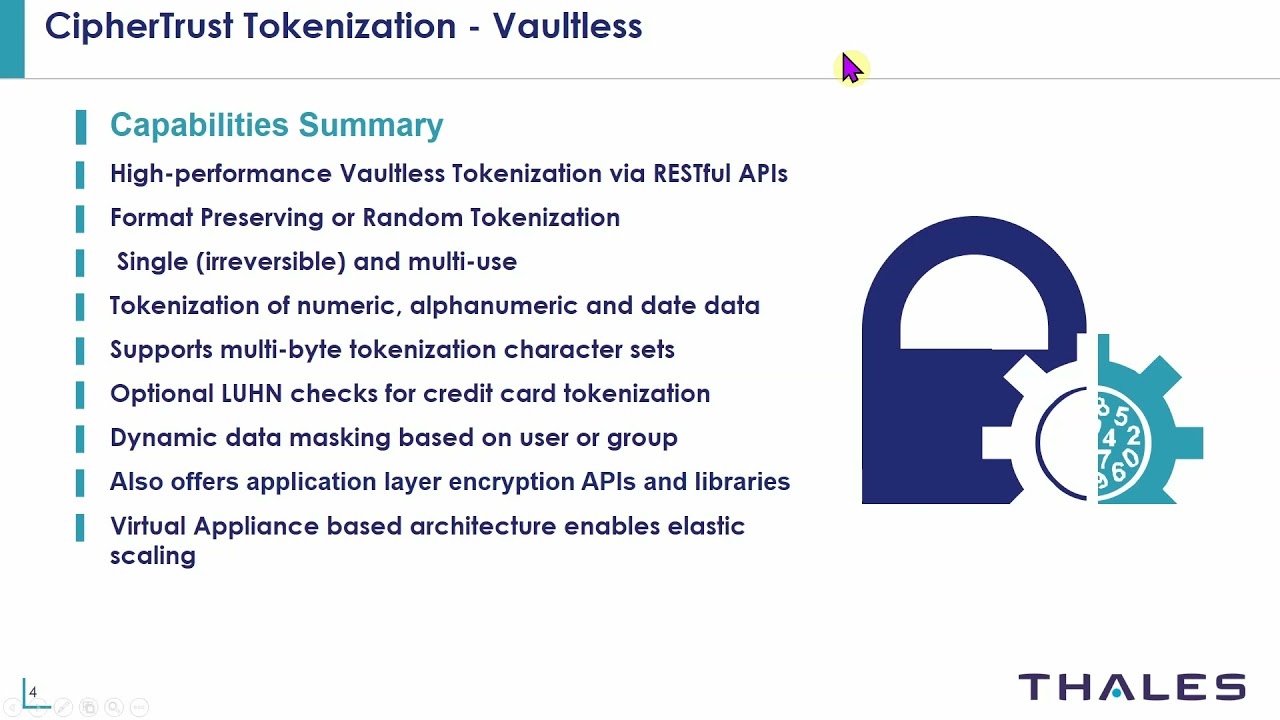
- Single platform for tokenization, encryption, and key lifecycle management - the vendor consolidation story procurement teams actually ask for in an RFP
- Vaultless FPE scales to millions of transactions per second without a central lookup store becoming the bottleneck
- FedRAMP authorization and on-premises deployment make it viable for government and air-gapped environments where EnigmaVault and other cloud-only vendors are disqualified
Watch-outs
- No published pricing; a real enterprise deployment typically runs $100K-$200K+ annually once implementation services are included
- Implementation requires a professional services engagement - expect 4-16 weeks depending on cloud vs on-prem scope
- The 47 G2 reviews span the whole CipherTrust product family, not tokenization specifically, so the rating is a platform-level signal, not a tokenization-specific one
Pricing breakdown
| Plan | Price | Best for |
|---|---|---|
| CipherTrust Tokenization | Custom quote | Enterprise structured data tokenization at scale |
Security & compliance
| Standard | Availability |
|---|---|
| Audit logs | Yes |
| Fedramp | Yes |
| GDPR | Yes |
| HIPAA | Yes |
| Iso27001 | Yes |
| SOC 2 Type II | Yes |
| SSO / SAML | Yes |
Thales CipherTrust Tokenization compliance summary: Audit logs is yes, fedramp is yes, GDPR is yes, HIPAA is yes, iso27001 is yes, SOC 2 Type II is yes, and SSO / SAML is yes.
Key integrations
| Integration | Type |
|---|---|
| Gmail | N/A |
| Outlook | N/A |
| Slack | N/A |
| LinkedIn Sales Navigator | N/A |
| Outreach / Salesloft | N/A |
Thales CipherTrust Tokenization integration summary: Gmail is not specified, Outlook is not specified, Slack is not specified, LinkedIn Sales Navigator is not specified, and Outreach or Salesloft is not specified.
Feature availability
| Feature | Status |
|---|---|
| Free tier | ✗ |
| Format preserving | ✓ AES-256 FPE |
| Structured data | ✓ |
| Unstructured | ✓ |
| Vaultless | ✓ |
Thales CipherTrust Tokenization feature availability summary: Free tier (✗), Format preserving (✓ AES-256 FPE), Structured data (✓), Unstructured (✓), and Vaultless (✓).
Loading reviews…
What's great
- FIPS 140-2 Level 3 validated whether you self-host the HSM or consume it as SaaS - a procurement requirement in financial services and government that disqualifies most cloud-only vendors
- Multi-cloud key sovereignty via AWS KMS External Key Store and Google Cloud External Key Manager - keys never leave Fortanix custody even when data sits in a hyperscaler
- 67 G2 reviews at 4.6/5 - one of the strongest independent validation bases in this comparison for an enterprise-tier platform
Watch-outs
- Tokenization is one capability inside a broader HSM and key-management suite - a team that only needs tokenization pays for adjacent capabilities it may not use
- No self-serve tier; a vendor engagement is required before pricing is visible, which slows the early scoping phase of an RFP
- Implementation runs weeks rather than days; plan for a dedicated integration sprint, not a drop-in API call
Pricing breakdown
| Plan | Price | Best for |
|---|---|---|
| Enterprise | Custom quote | Organizations with HSM key management plus tokenization requirements |
Security & compliance
| Standard | Availability |
|---|---|
| Audit logs | Yes |
| Fedramp | Yes |
| GDPR | Yes |
| HIPAA | Yes |
| Iso27001 | Yes |
| SOC 2 Type II | Yes |
| SSO / SAML | Yes |
Fortanix Data Security Manager compliance summary: Audit logs is yes, fedramp is yes, GDPR is yes, HIPAA is yes, iso27001 is yes, SOC 2 Type II is yes, and SSO / SAML is yes.
Key integrations
| Integration | Type |
|---|---|
| Gmail | N/A |
| Outlook | N/A |
| Slack | N/A |
| LinkedIn Sales Navigator | N/A |
| Outreach / Salesloft | N/A |
Fortanix Data Security Manager integration summary: Gmail is not specified, Outlook is not specified, Slack is not specified, LinkedIn Sales Navigator is not specified, and Outreach or Salesloft is not specified.
Feature availability
| Feature | Status |
|---|---|
| Free tier | ✗ |
| Format preserving | ✓ |
| Structured data | ✓ |
| Unstructured | ✗ |
| Vaultless | ✗ |
Fortanix Data Security Manager feature availability summary: Free tier (✗), Format preserving (✓), Structured data (✓), Unstructured (✗), and Vaultless (✗).
Loading reviews…
What's great
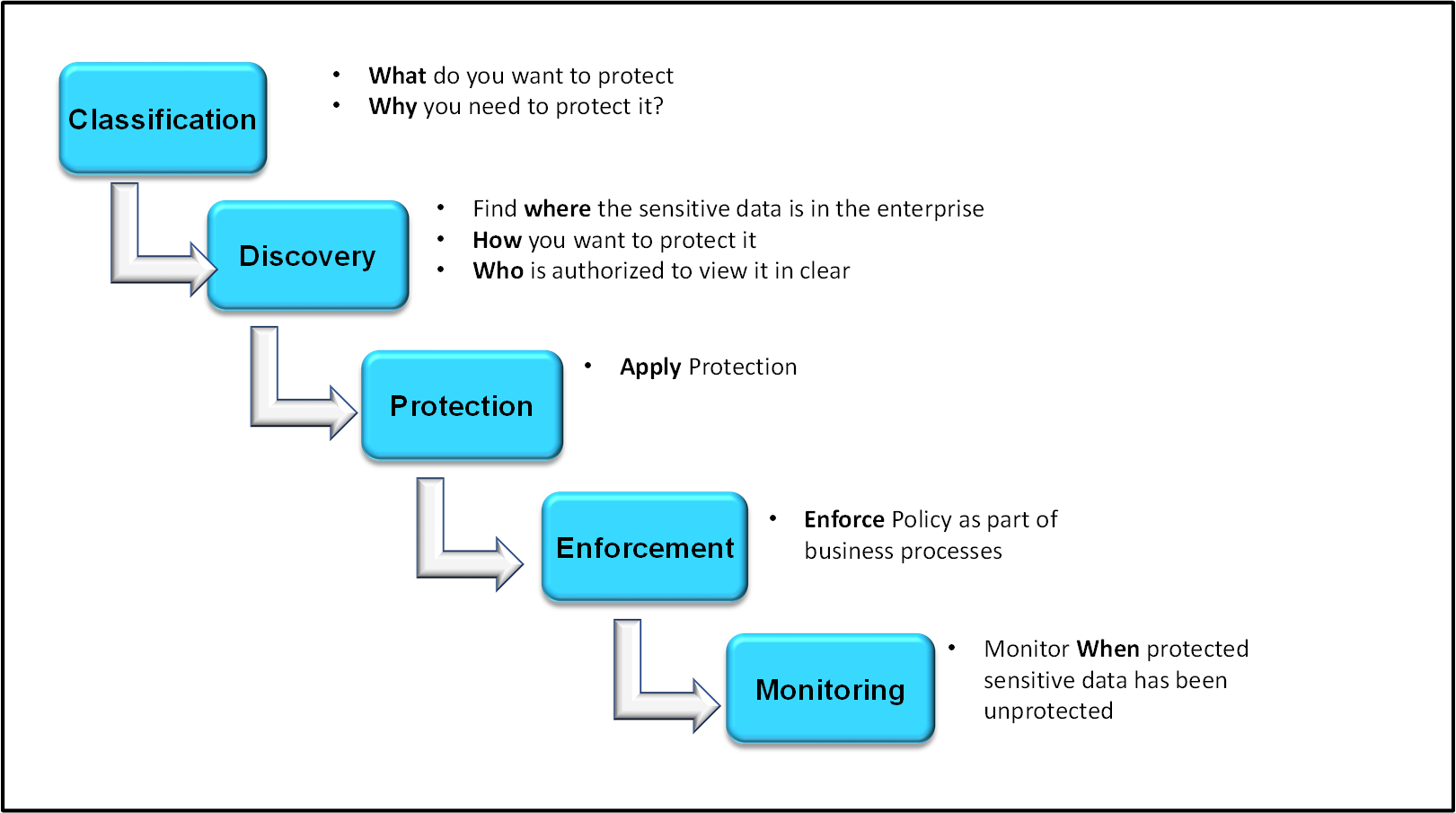
- One policy configuration change propagates across Snowflake, Teradata, AWS, and on-premises Oracle simultaneously - the exact "single pane of glass" a platform RFP is written to find
- Supports Hadoop, Teradata, Snowflake, Databricks, and AWS-native data stores under one governance framework, reducing the number of vendor contracts a security team manages
- Format-preserving tokenization with minimal application performance impact, validated across large-scale production deployments
Watch-outs
- ~$300,000/year starting cost puts it out of reach for mid-market buyers; this is a large-enterprise-budget decision
- Only 14 G2 reviews against that price tag - a procurement team should weight analyst references and customer calls heavily over the review count
- Multi-month implementation typically requires a dedicated Protegrity administrator or systems-integrator partner
Pricing breakdown
| Plan | Price | Best for |
|---|---|---|
| Enterprise | ~$300 | Enterprise-wide tokenization policy across all data systems |
Security & compliance
| Standard | Availability |
|---|---|
| Audit logs | Yes |
| Fedramp | No |
| GDPR | Yes |
| HIPAA | Yes |
| Iso27001 | Yes |
| SOC 2 Type II | Yes |
| SSO / SAML | Yes |
Protegrity compliance summary: Audit logs is yes, fedramp is no, GDPR is yes, HIPAA is yes, iso27001 is yes, SOC 2 Type II is yes, and SSO / SAML is yes.
Key integrations
| Integration | Type |
|---|---|
| Gmail | N/A |
| Outlook | N/A |
| Slack | N/A |
| LinkedIn Sales Navigator | N/A |
| Outreach / Salesloft | N/A |
Protegrity integration summary: Gmail is not specified, Outlook is not specified, Slack is not specified, LinkedIn Sales Navigator is not specified, and Outreach or Salesloft is not specified.
Feature availability
| Feature | Status |
|---|---|
| Free tier | ✗ |
| Format preserving | ✓ |
| Structured data | ✓ |
| Unstructured | ✓ |
| Vaultless | ✓ |
Protegrity feature availability summary: Free tier (✗), Format preserving (✓), Structured data (✓), Unstructured (✓), and Vaultless (✓).
Loading reviews…
What's great
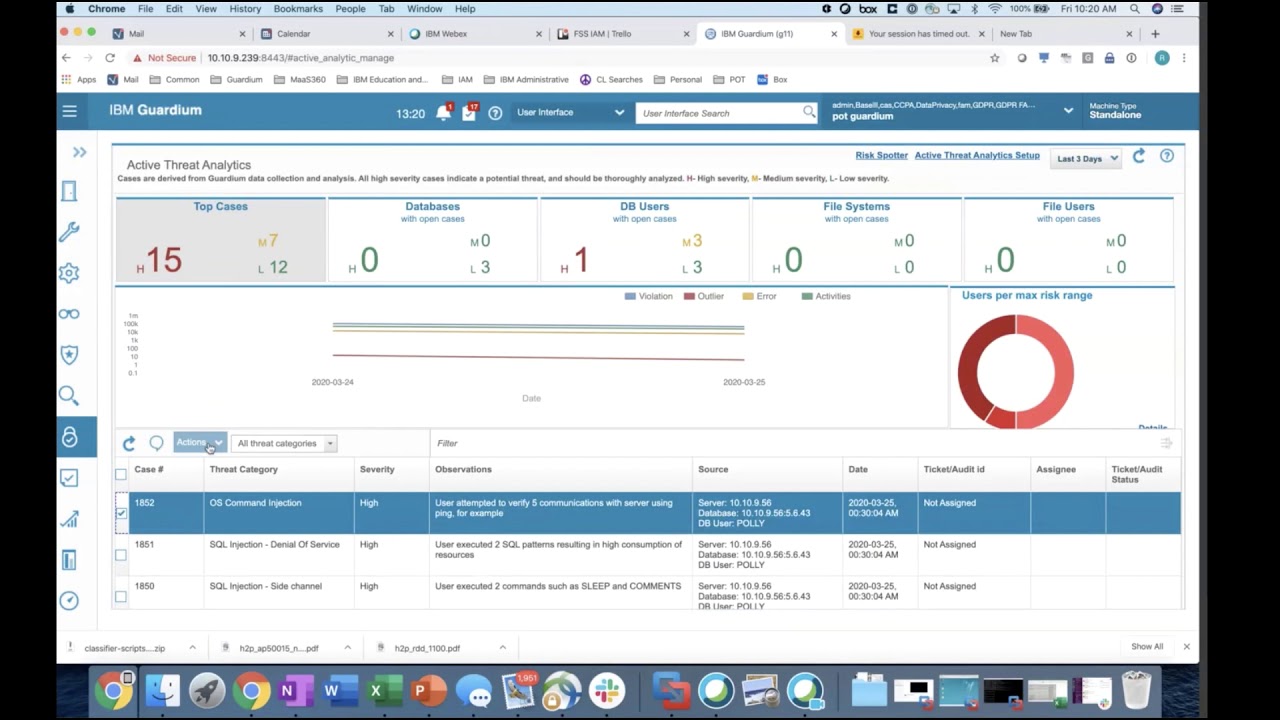
- Auto-discovers sensitive data across Oracle, SQL Server, DB2, MySQL, PostgreSQL, and cloud-native databases before a procurement team even scopes the tokenization policy
- 96 G2 reviews - the largest review base in this comparison, giving the most statistically reliable rating signal
- Tokenization and dynamic masking apply directly at the database layer, which matters for a platform consolidation that includes database security monitoring
Watch-outs
- 4.1/5 is the lowest pure rating in this guide, driven by UX complexity and support responsiveness complaints in the reviews
- Implementation requiring IBM professional services commonly runs 3-6 months - the longest timeline in this comparison
- Enterprise licensing cost makes it a hard sell for a team whose scope is a single tokenization project rather than estate-wide database security
Pricing breakdown
| Plan | Price | Best for |
|---|---|---|
| Guardium Data Protection | Custom quote | Enterprise database discovery |
Security & compliance
| Standard | Availability |
|---|---|
| Audit logs | Yes |
| Fedramp | Yes |
| GDPR | Yes |
| HIPAA | Yes |
| Iso27001 | Yes |
| SOC 2 Type II | Yes |
| SSO / SAML | Yes |
IBM Guardium Data Protection compliance summary: Audit logs is yes, fedramp is yes, GDPR is yes, HIPAA is yes, iso27001 is yes, SOC 2 Type II is yes, and SSO / SAML is yes.
Key integrations
| Integration | Type |
|---|---|
| Gmail | N/A |
| Outlook | N/A |
| Slack | N/A |
| LinkedIn Sales Navigator | N/A |
| Outreach / Salesloft | N/A |
IBM Guardium Data Protection integration summary: Gmail is not specified, Outlook is not specified, Slack is not specified, LinkedIn Sales Navigator is not specified, and Outreach or Salesloft is not specified.
Feature availability
| Feature | Status |
|---|---|
| Free tier | ✗ |
| Format preserving | ✓ |
| Structured data | ✓ |
| Unstructured | ✓ |
| Vaultless | ✗ |
IBM Guardium Data Protection feature availability summary: Free tier (✗), Format preserving (✓), Structured data (✓), Unstructured (✓), and Vaultless (✗).
Loading reviews…
What's great
- Cloud-agnostic architecture avoids locking a procurement decision to one hyperscaler or payment processor - a meaningful risk-reduction point in a platform RFP
- One vault handles both payment card tokenization and general PII tokenization, reducing the number of separate vendor contracts a security team maintains
- Multiple token formats (format-preserving, random, hash-based) let different downstream systems get the token type they need from one platform
Watch-outs
- No public pricing; every deployment, even mid-market, requires an enterprise quote conversation
- 18 G2 reviews is a growing but still thin base relative to IBM Guardium or Fortanix for a platform-scale decision
- Payment tokenization heritage means some general PII and AI-pipeline use cases are better served by purpose-built data security platforms
Pricing breakdown
| Plan | Price | Best for |
|---|---|---|
| Enterprise | Custom quote | Multi-data-type tokenization across cloud and payment processors |
Security & compliance
| Standard | Availability |
|---|---|
| Audit logs | Yes |
| Fedramp | No |
| GDPR | Yes |
| HIPAA | Yes |
| Iso27001 | Yes |
| SOC 2 Type II | Yes |
| SSO / SAML | Yes |
TokenEx compliance summary: Audit logs is yes, fedramp is no, GDPR is yes, HIPAA is yes, iso27001 is yes, SOC 2 Type II is yes, and SSO / SAML is yes.
Key integrations
| Integration | Type |
|---|---|
| Gmail | N/A |
| Outlook | N/A |
| Slack | N/A |
| LinkedIn Sales Navigator | N/A |
| Outreach / Salesloft | N/A |
TokenEx integration summary: Gmail is not specified, Outlook is not specified, Slack is not specified, LinkedIn Sales Navigator is not specified, and Outreach or Salesloft is not specified.
Feature availability
| Feature | Status |
|---|---|
| Free tier | ✗ |
| Format preserving | ✓ |
| Structured data | ✓ |
| Unstructured | ✓ |
| Vaultless | ✗ |
TokenEx feature availability summary: Free tier (✗), Format preserving (✓), Structured data (✓), Unstructured (✓), and Vaultless (✗).
Loading reviews…
Micro Focus Voltage SecureData
FPE tokenization for structured data in legacy and mainframe estatesWhat's great
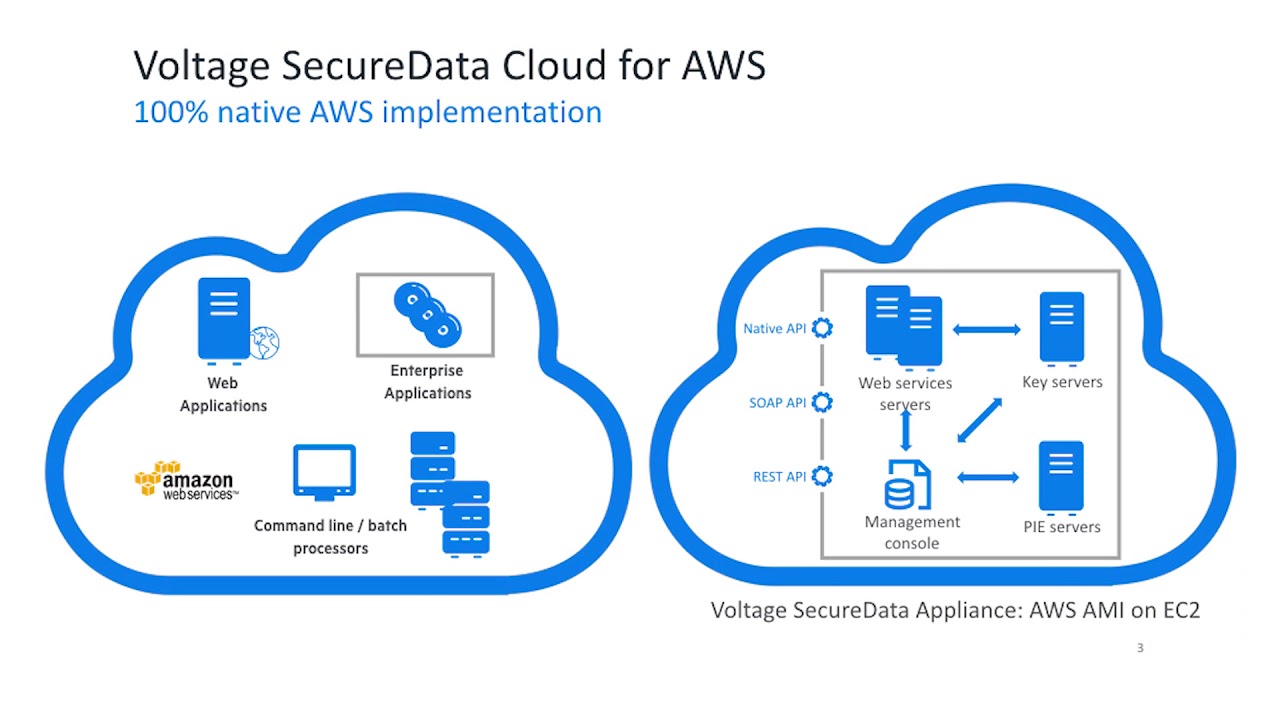
- Format-preserving encryption designed for mainframe and legacy structured data environments where a schema change is not an option
- Spans batch files, real-time transactions, and cloud-native data stores from one platform - useful for a hybrid-era migration project
- Decades of enterprise financial services tokenization heritage; strong existing footprint in banking and insurance platform estates
Watch-outs
- 4.0/5 on G2 across 22 reviews, the lowest rating in this comparison, reflecting UX age relative to cloud-native competitors
- Now under OpenText following the Micro Focus acquisition, which has introduced roadmap continuity questions among reviewers evaluating a multi-year platform commitment
- A harder sell for a net-new platform selection than for an organization already standardized on Voltage extending its footprint
Pricing breakdown
| Plan | Price | Best for |
|---|---|---|
| Enterprise | Custom quote | Legacy mainframe and structured data FPE tokenization |
Security & compliance
| Standard | Availability |
|---|---|
| Audit logs | Yes |
| Fedramp | No |
| GDPR | Yes |
| HIPAA | Yes |
| Iso27001 | Yes |
| SOC 2 Type II | Yes |
| SSO / SAML | Yes |
Micro Focus Voltage SecureData compliance summary: Audit logs is yes, fedramp is no, GDPR is yes, HIPAA is yes, iso27001 is yes, SOC 2 Type II is yes, and SSO / SAML is yes.
Key integrations
| Integration | Type |
|---|---|
| Gmail | N/A |
| Outlook | N/A |
| Slack | N/A |
| LinkedIn Sales Navigator | N/A |
| Outreach / Salesloft | N/A |
Micro Focus Voltage SecureData integration summary: Gmail is not specified, Outlook is not specified, Slack is not specified, LinkedIn Sales Navigator is not specified, and Outreach or Salesloft is not specified.
Feature availability
| Feature | Status |
|---|---|
| Free tier | ✗ |
| Format preserving | ✓ |
| Structured data | ✓ |
| Unstructured | ✗ |
| Vaultless | ✓ |
Micro Focus Voltage SecureData feature availability summary: Free tier (✗), Format preserving (✓), Structured data (✓), Unstructured (✗), and Vaultless (✓).
Loading reviews…
What's great
- Native integration with Snowflake, Databricks, BigQuery, Redshift, and Starburst - the strongest cloud analytics and AI-pipeline platform coverage in this comparison
- Attribute-based access control applies masking or tokenization dynamically per user, role, and data classification, which is exactly how AI/ML teams need to govern training-data access
- 72 G2 reviews at 4.4/5 - the best-reviewed platform in this list for cloud analytics data governance specifically
Watch-outs
- Tokenization is a secondary capability inside a broader access-governance platform, not a dedicated tokenization vault
- Enterprise pricing with no public rate card; a procurement team should expect a multi-stakeholder sales process
- Better suited to governing analytics and AI-pipeline data access than tokenizing transactional application data at the point of capture

Pricing breakdown
| Plan | Price | Best for |
|---|---|---|
| Enterprise | Custom quote | Cloud analytics data access governance with dynamic masking |
Security & compliance
| Standard | Availability |
|---|---|
| Audit logs | Yes |
| Fedramp | Yes |
| GDPR | Yes |
| HIPAA | Yes |
| Iso27001 | Yes |
| SOC 2 Type II | Yes |
| SSO / SAML | Yes |
Immuta compliance summary: Audit logs is yes, fedramp is yes, GDPR is yes, HIPAA is yes, iso27001 is yes, SOC 2 Type II is yes, and SSO / SAML is yes.
Key integrations
| Integration | Type |
|---|---|
| Gmail | N/A |
| Outlook | N/A |
| Slack | N/A |
| LinkedIn Sales Navigator | N/A |
| Outreach / Salesloft | N/A |
Immuta integration summary: Gmail is not specified, Outlook is not specified, Slack is not specified, LinkedIn Sales Navigator is not specified, and Outreach or Salesloft is not specified.
Feature availability
| Feature | Status |
|---|---|
| Free tier | ✗ |
| Format preserving | ✓ |
| Structured data | ✓ |
| Unstructured | ✗ |
| Vaultless | ✗ |
Immuta feature availability summary: Free tier (✗), Format preserving (✓), Structured data (✓), Unstructured (✗), and Vaultless (✗).
Loading reviews…
What's great
- Transparent proxy applies tokenization between application and database with zero code changes - the fastest rollout path in this comparison
- Role-based access at the individual data-value level means different internal teams see different views of the same tokenized field from one deployment
- AWS Marketplace listing simplifies procurement paperwork for teams already buying through AWS consolidated billing
Watch-outs
- Only 11 G2 reviews - a procurement team should treat this as early-stage validation, not a mature platform track record
- $600/month with no free tier means evaluation starts with a sales conversation rather than a self-serve trial
- Primarily optimized for cloud data stores (AWS RDS, Snowflake, Redshift); limited fit for mainframe or on-prem legacy estates

Pricing breakdown
| Plan | Price | Best for |
|---|---|---|
| Starter | $600/month | Cloud data store tokenization |
| Enterprise | Custom quote | Multi-cloud |
Security & compliance
| Standard | Availability |
|---|---|
| Audit logs | Yes |
| Fedramp | No |
| GDPR | Yes |
| HIPAA | Yes |
| Iso27001 | Yes |
| SOC 2 Type II | Yes |
| SSO / SAML | Yes |
Baffle.io compliance summary: Audit logs is yes, fedramp is no, GDPR is yes, HIPAA is yes, iso27001 is yes, SOC 2 Type II is yes, and SSO / SAML is yes.
Key integrations
| Integration | Type |
|---|---|
| Gmail | N/A |
| Outlook | N/A |
| Slack | N/A |
| LinkedIn Sales Navigator | N/A |
| Outreach / Salesloft | N/A |
Baffle.io integration summary: Gmail is not specified, Outlook is not specified, Slack is not specified, LinkedIn Sales Navigator is not specified, and Outreach or Salesloft is not specified.
Feature availability
| Feature | Status |
|---|---|
| Free tier | ✗ |
| Format preserving | ✓ |
| Structured data | ✓ |
| Unstructured | ✗ |
| Vaultless | ✗ |
Baffle.io feature availability summary: Free tier (✗), Format preserving (✓), Structured data (✓), Unstructured (✗), and Vaultless (✗).
Loading reviews…
What's great
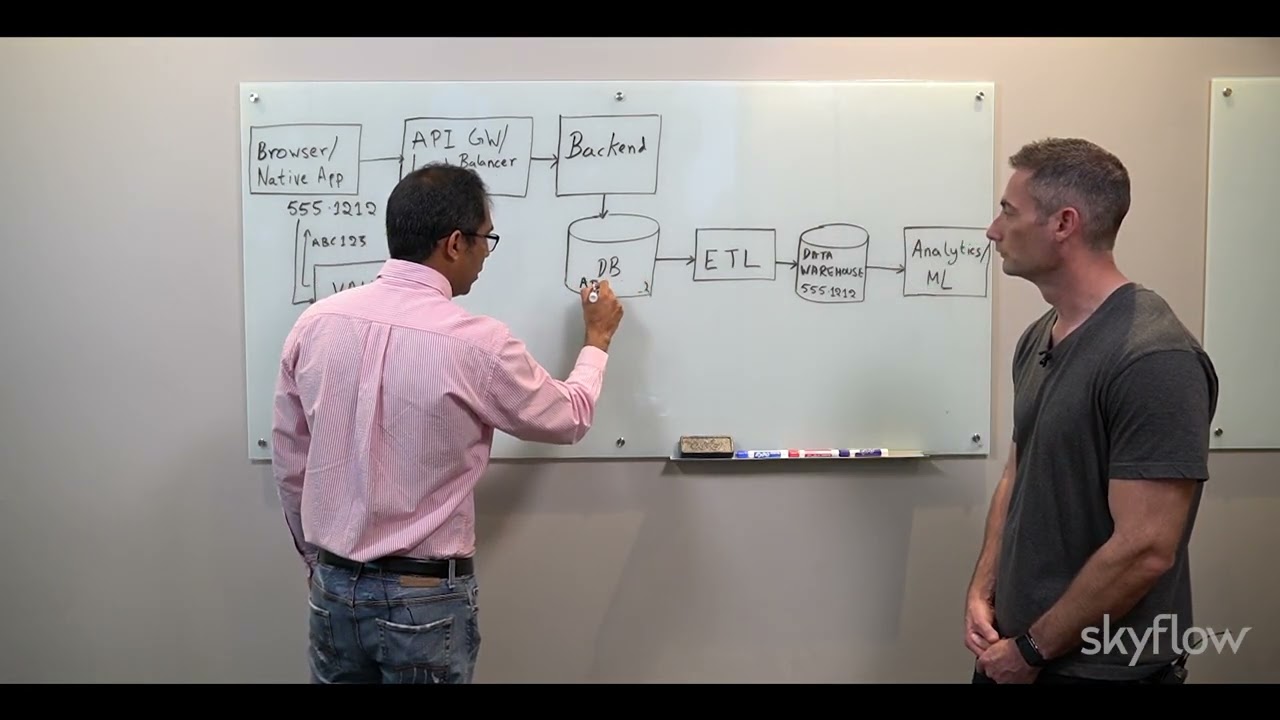
- map[Polymorphic encryption:the same stored token reveals differently depending on caller role - full value, masked, or format-preserving - without duplicating data]
- API-first, drop-in architecture designed to add platform-grade tokenization to existing applications without an infrastructure redesign
- Strong PCI DSS and HIPAA compliance posture purpose-built for fintech and healthtech data vaulting
Watch-outs
- Only 2 G2 reviews; the 5.0/5 rating is not statistically meaningful for a platform-scale procurement decision
- No public pricing and no self-serve evaluation path - every engagement starts enterprise-only
- Priced above EnigmaVault for comparable core tokenization functionality; the premium buys polymorphic access control specifically
Pricing breakdown
| Plan | Price | Best for |
|---|---|---|
| Enterprise | Custom quote | Fintech and healthtech data vaulting with role-based reveal |
Security & compliance
| Standard | Availability |
|---|---|
| Audit logs | Yes |
| Fedramp | No |
| GDPR | Yes |
| HIPAA | Yes |
| Iso27001 | Yes |
| SOC 2 Type II | Yes |
| SSO / SAML | Yes |
Skyflow Data Privacy Vault compliance summary: Audit logs is yes, fedramp is no, GDPR is yes, HIPAA is yes, iso27001 is yes, SOC 2 Type II is yes, and SSO / SAML is yes.
Key integrations
| Integration | Type |
|---|---|
| Gmail | N/A |
| Outlook | N/A |
| Slack | N/A |
| LinkedIn Sales Navigator | N/A |
| Outreach / Salesloft | N/A |
Skyflow Data Privacy Vault integration summary: Gmail is not specified, Outlook is not specified, Slack is not specified, LinkedIn Sales Navigator is not specified, and Outreach or Salesloft is not specified.
Feature availability
| Feature | Status |
|---|---|
| Free tier | ✗ |
| Format preserving | ✓ |
| Structured data | ✓ |
| Unstructured | ✓ |
| Vaultless | ✗ |
Skyflow Data Privacy Vault feature availability summary: Free tier (✗), Format preserving (✓), Structured data (✓), Unstructured (✓), and Vaultless (✗).
Loading reviews…
The vendor consolidation question every platform RFP should answer
The single highest-leverage question in an AI data security tokenization platform evaluation isn’t “which vendor scores highest” - it’s “how many existing systems does this replace, and what does that actually save.”
Most organizations arrive at a platform decision already running two or three point tools: a payment tokenizer bolted onto the checkout flow, a database masking add-on for one data warehouse, maybe a separate de-identification step before data reaches an AI pipeline. Each of those tools carries its own licensing cost, its own compliance documentation to maintain, its own vendor relationship to manage, and its own audit trail that a security team has to reconcile with the others during a SOC 2 or ISO 27001 review.
A platform like Protegrity, Thales CipherTrust, or Fortanix consolidates that into one policy engine, one key management layer, and one audit log. The consolidation case is strongest when an organization is already running three or more sensitive-data systems and the aggregate cost of maintaining them separately - licensing plus the labor cost of separate audits - exceeds what a single platform contract would run. Below that threshold, a dedicated point solution like EnigmaVault or TokenEx delivers the core tokenization capability without paying for platform breadth the organization doesn’t yet need.
If a point solution is the better fit for your stage, see our dedicated comparisons for data tokenization software , PII tokenization for LLM pipelines , and customer vault tokenization .
What belongs in the procurement scorecard
Vault availability SLA, with fail-open vs fail-closed specified. If the tokenization vault goes down, does the application fail open (dangerous - raw sensitive data flows through) or fail closed (safe but the application breaks)? Every enterprise vendor should answer this in writing before a contract is signed, not after an incident.
Key custody model. Does the vendor hold the encryption keys, or does the organization retain custody through bring-your-own-key (BYOK) or hold-your-own-key (HYOK)? Fortanix’s multi-cloud key sovereignty model and Thales’s integrated key management are built around organizations that require custody control as a non-negotiable procurement term.
Multi-cloud and on-prem deployment flexibility. An organization with workloads split across AWS, Azure, and an on-premises data center needs a platform that deploys consistently everywhere - not a vendor whose product is strong on one cloud and absent elsewhere. Thales CipherTrust, Fortanix, IBM Guardium, and Protegrity all support hybrid deployment; EnigmaVault, TokenEx, and Skyflow are cloud-only.
Compliance documentation readiness, not just a certification badge. A PCI DSS logo on a vendor’s homepage is not the same as having the Attestation of Compliance (AOC) document, the current SOC 2 Type II report, and a DPA template ready to attach to the contract. Request all three before the RFP closes.
Total cost of ownership over a 3-year contract
List price is the least useful number in a platform evaluation. The real total cost of ownership includes implementation services (often $0 for EnigmaVault’s self-serve model, $50K-$150K+ for an enterprise platform with professional services), integration engineering time across every system being connected, ongoing administration headcount for policy management, and the cost of migrating off the platform if the vendor relationship doesn’t work out.
A rough rule that held across the vendors in this comparison: self-serve, API-first platforms (EnigmaVault, Baffle.io) have the lowest 3-year TCO for organizations with a scoped tokenization need and the fewest systems to integrate. Enterprise platform consolidations (Thales, Protegrity, Fortanix) have a higher entry cost but a lower marginal cost per additional system onboarded - the TCO crossover point is typically around the third or fourth system a platform needs to cover.
How we chose these ten platforms
We evaluated each platform the way an enterprise procurement team would: multi-cloud and on-premises deployment flexibility, vendor consolidation potential, SLA and vault-availability guarantees, compliance documentation readiness, key custody model, and total cost of ownership across a 3-year contract term rather than list price alone. G2 ratings cited were pulled in October 2026. Pricing was verified from vendor websites, publicly available RFP responses, or third-party analyst sources.
For corrections or feedback, email hello@ceopickz.com .
Frequently asked questions
What's the difference between a tokenization tool and a tokenization platform for enterprise procurement?
A tokenization tool solves one problem - usually tokenizing one data type for one application. A tokenization platform centralizes policy, key management, and audit logging so the same governance applies consistently across every database, cloud environment, and AI pipeline in the organization. Protegrity and Thales CipherTrust are platform-grade in this sense; Baffle.io and Skyflow are closer to purpose-built tools that can anchor a platform strategy over time. The procurement question to ask a vendor directly: 'how many separate systems would this replace in our current stack, and how is policy enforced consistently across all of them?'
How many point solutions does a tokenization platform typically consolidate?
In enterprises we've reviewed, a platform like Protegrity or Thales CipherTrust commonly replaces 3-6 point tools - a payment tokenizer, a database masking tool, a cloud data warehouse de-identification add-on, and often a separate key management system. The consolidation math works when the combined licensing and maintenance cost of those point tools, plus the audit overhead of maintaining separate compliance documentation for each, exceeds the platform's cost. For organizations with fewer than three sensitive data systems, EnigmaVault or TokenEx deliver the core tokenization capability without the platform premium.
What should go in an RFP for an AI data security tokenization platform?
Beyond standard tokenization capability (format-preserving, vaulted vs vaultless), an enterprise RFP should require: the vendor's full compliance documentation package (AOC, SOC 2 Type II report, DPA template) available pre-signature; a published or quotable vault-availability SLA with fail-open vs fail-closed behavior specified; key custody model (vendor-held, BYOK, or HYOK); multi-cloud deployment support if the data estate spans more than one hyperscaler; and a reference customer at comparable scale willing to speak directly with the evaluation team.
Is FedRAMP authorization required for an AI data security tokenization platform?
Only for US federal agencies or contractors handling federal data - FedRAMP (or FISMA-authorized deployment) is typically a hard procurement gate in that context. Thales CipherTrust, Fortanix, IBM Guardium, and Immuta hold FedRAMP-aligned authorizations or deployments. EnigmaVault, TokenEx, Protegrity, and most mid-market tokenization vendors are not FedRAMP authorized and would need an on-premises or FISMA-specific deployment path for government use cases.
How long does an enterprise tokenization platform selection and deployment take end to end?
Budget 2-4 months for vendor evaluation and RFP across 3-5 shortlisted platforms, then implementation separately: EnigmaVault or Baffle.io reach production in days to weeks once selected; TokenEx and Skyflow typically run 4-8 weeks; IBM Guardium, Protegrity, and Thales CipherTrust enterprise deployments with professional services commonly run 3-6 months. A platform consolidation project replacing multiple existing point tools should budget the longer end of that range plus migration time for each system being replaced.
Should a multi-cloud organization pick one tokenization platform or a different vendor per cloud?
A single cloud-agnostic platform (Thales CipherTrust, TokenEx, Fortanix with its multi-cloud key sovereignty model) is almost always the better procurement decision over per-cloud point solutions - it means one policy engine, one audit trail, and one vendor relationship instead of reconciling tokenization behavior differences across AWS, Azure, and GCP separately. The exception is an organization already deep into one cloud's native tooling (e.g., Google Cloud Sensitive Data Protection for a GCP-only estate) where a single-cloud tool may be cheaper and sufficient if there's no near-term multi-cloud roadmap.
Related helpful reads
Write a review
Posts to the page right away. Keep it real — no links or email addresses.