
Comparing the best PCI DSS Tokenization Software of 2026 includes 1. EnigmaVault 2. TokenEx 3. Spreedly 4. Bluefin 5. Stripe 6. Braintree (by PayPal) 7. CyberSource (Visa) 8. Adyen 9. Authorize.Net 10. Worldpay.
TL;DR
- EnigmaVault: Best overall, PCI DSS Level 1 certified Card Vault, processor-agnostic, free Lite tier — fastest path to CDE removal for developers.
- TokenEx: Best for CDE elimination, transparent gateway model removes all card data from your environment before it enters your systems.
- Spreedly: Best multi-processor scope reduction, 120+ gateway integrations with a single PCI DSS Level 1 vault, 4.5/5 on G2.
- Bluefin: Best for P2PE + tokenization, PCI-validated P2PE hardware combined with cloud tokenization for the deepest in-person PCI scope reduction.
- CyberSource: Best compliance breadth, PCI DSS Level 1 + FedRAMP authorized, Visa-owned, Token Management Service for government and regulated enterprise.
Ten PCI DSS tokenization platforms compared on certification level (Level 1 vs Level 2), scope reduction depth, vault ownership model, processor independence, network token support, and total compliance cost. Which platforms genuinely remove your systems from the cardholder data environment, which ones just shift the liability, and what the real annual QSA savings look like.
What is PCI DSS tokenization software?
PCI DSS tokenization software replaces sensitive cardholder data (PANs, CVVs, expiry dates) with non-sensitive tokens so that your systems never store, process, or transmit raw card data — removing them from PCI DSS compliance scope.
The core benefit of tokenization under PCI DSS is cardholder data environment (CDE) reduction. When your application handles only tokens and the token vault is operated by a PCI DSS Level 1 certified provider, your annual SAQ or QSA assessment scope shrinks dramatically — from hundreds of controls to a fraction, saving $20,000–$200,000 per year in compliance costs depending on your transaction volume.
Best PCI DSS Tokenization Software comparison: features, pricing and verdicts
| Tool | Best for | Starting price | Free trial | External rating |
|---|---|---|---|---|
PCI DSS Level 1 Card Vault with processor-agnostic scope reduction | Free | Free Lite tier forever | G2 4.4/5 (6 reviews) | |
Transparent gateway model removes cardholder data before it enters your environment | Custom quote | Demo available | G2 4.4/5 (18 reviews) | |
120+ processor integrations with a single PCI DSS Level 1 vault | Custom quote | Free trial available | G2 4.5/5 (47 reviews) | |
PCI-validated P2PE hardware plus cloud tokenization for deepest in-person scope reduction | Custom quote | Demo available | G2 4.3/5 (22 reviews) | |
Native payment tokenization with the widest developer adoption | 2.9% + $0.30/transaction | No monthly minimum | G2 4.3/5 (13,157 reviews) | |
PayPal-owned vault with broad payment method tokenization | 2.59% + $0.49/transaction | No setup fees | G2 4.1/5 (328 reviews) | |
PCI DSS Level 1 + FedRAMP authorized Token Management Service | Custom quote | Enterprise contract | G2 4.0/5 (88 reviews) | |
Global enterprise tokenization with direct acquiring in 35+ countries | Interchange + ~0.3%/transaction | Enterprise contract | G2 4.1/5 (263 reviews) | |
SMB-accessible PCI DSS tokenization with Customer Information Manager | $25/month + 2.9% + $0.30/transaction | No setup fee | G2 3.9/5 (632 reviews) | |
Global acquiring with enterprise PCI DSS token management | Custom quote | Enterprise contract | G2 3.8/5 (131 reviews) |
How we chose these tools
We compared each PCI DSS tokenization platform on certification level (PCI DSS Level 1 vs. Level 2 or SAQ), scope reduction depth (partial vs. full CDE removal), vault architecture (independent vs. processor-native), network tokenization support, processor independence, pricing transparency, and G2 reviewer satisfaction. G2 ratings were pulled in October 2026. Pricing was verified from vendor websites or confirmed via third-party sources.
Read the full CEOPickz.com testing methodology, the scoring criteria, weights, and the data we collect for every tool.
Detailed reviews
EnigmaVault
PCI DSS Level 1 Card Vault with processor-agnostic scope reductionWhat's great
- PCI DSS Level 1 certified — the highest certification tier, covering all card brands and required for processors handling over 6 million transactions annually
- Processor-agnostic vault means the same PCI-compliant token routes to any downstream payment processor, with zero card data touching your application servers
- Free Lite tier (1,000 requests/month) includes full PCI DSS L1 scope reduction from day one — rare among certified providers; Plus at $49.99/month, Premium at $249.99/month
Watch-outs
- Only 6 G2 reviews — an early-stage vendor with thin independent validation versus Stripe or CyberSource
- Card Vault, Data Vault, and File Vault priced separately; organizations needing all three pay per-product
- No native P2PE (point-to-point encryption) for in-person POS payments; scope reduction is strongest for ecommerce and API-driven payment flows
Pricing breakdown
| Plan | Price | Best for |
|---|---|---|
| Lite | Free forever | Development |
| Plus | $49.99/month | Production payment tokenization |
| Premium | $249.99/month | High-volume |
Security & compliance
| Standard | Availability |
|---|---|
| Audit logs | Yes |
| Fedramp | No |
| GDPR | Yes |
| HIPAA | Yes |
| Iso27001 | Yes |
| Pci dss l1 | Yes |
| SOC 2 Type II | Yes |
EnigmaVault compliance summary: Audit logs is yes, fedramp is no, GDPR is yes, HIPAA is yes, iso27001 is yes, pci dss l1 is yes, and SOC 2 Type II is yes.
Key integrations
| Integration | Type |
|---|---|
| Gmail | N/A |
| Outlook | N/A |
| Slack | N/A |
| LinkedIn Sales Navigator | N/A |
| Outreach / Salesloft | N/A |
EnigmaVault integration summary: Gmail is not specified, Outlook is not specified, Slack is not specified, LinkedIn Sales Navigator is not specified, and Outreach or Salesloft is not specified.
Feature availability
| Feature | Status |
|---|---|
| Free tier | ✓ |
| Cde removal | ✓ |
| Network tokenization | ✗ |
| P2pe | ✗ |
| Processor agnostic | ✓ |
EnigmaVault feature availability summary: Free tier (✓), Cde removal (✓), Network tokenization (✗), P2pe (✗), and Processor agnostic (✓).
Loading reviews…
TokenEx
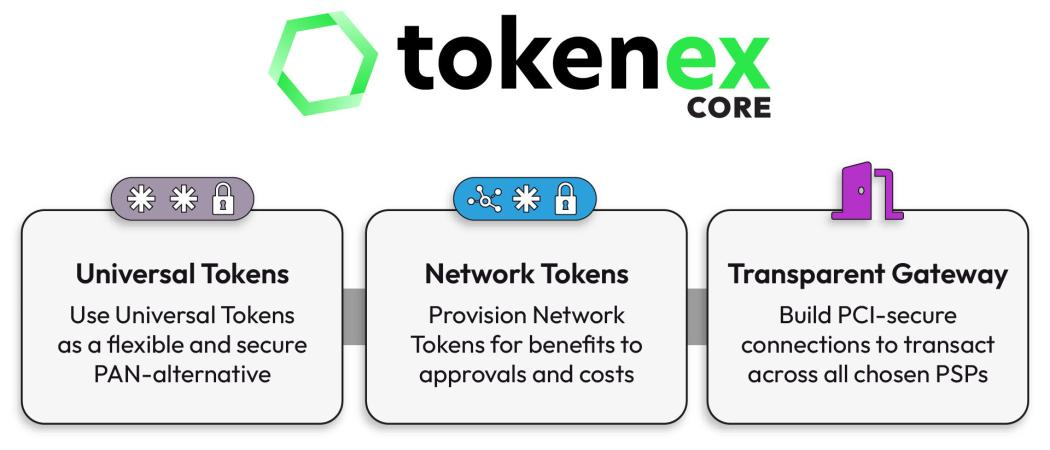
Transparent gateway model removes cardholder data before it enters your environmentWhat's great
- Transparent gateway intercepts card data before it reaches your application servers — your systems see only tokens, achieving maximum PCI scope reduction without changing your existing architecture
- Supports format-preserving tokens (token looks like a card number), random tokens, and hash-based tokens per downstream system requirement
- map[Cloud-agnostic vault architecture:TokenEx tokens work with any processor, data warehouse, ERP, or analytics system — no lock-in to any single vendor]
Watch-outs
- No public pricing — all deployments require enterprise quote; not suitable for teams needing self-serve activation
- 18 G2 reviews — solid real-world validation but thin relative to processor-native options like Stripe with 13,000+ reviews
- Less purpose-built for payment orchestration (smart routing, cascading) than Spreedly; primarily a tokenization vault
Pricing breakdown
| Plan | Price | Best for |
|---|---|---|
| Enterprise | Custom quote | Full CDE removal |
Security & compliance
| Standard | Availability |
|---|---|
| Audit logs | Yes |
| Fedramp | No |
| GDPR | Yes |
| HIPAA | Yes |
| Iso27001 | Yes |
| Pci dss l1 | Yes |
| SOC 2 Type II | Yes |
TokenEx compliance summary: Audit logs is yes, fedramp is no, GDPR is yes, HIPAA is yes, iso27001 is yes, pci dss l1 is yes, and SOC 2 Type II is yes.
Key integrations
| Integration | Type |
|---|---|
| Gmail | N/A |
| Outlook | N/A |
| Slack | N/A |
| LinkedIn Sales Navigator | N/A |
| Outreach / Salesloft | N/A |
TokenEx integration summary: Gmail is not specified, Outlook is not specified, Slack is not specified, LinkedIn Sales Navigator is not specified, and Outreach or Salesloft is not specified.
Feature availability
| Feature | Status |
|---|---|
| Free tier | ✗ |
| Cde removal | ✓ transparent gateway |
| Network tokenization | ✓ |
| P2pe | ✗ |
| Processor agnostic | ✓ |
TokenEx feature availability summary: Free tier (✗), Cde removal (✓ transparent gateway), Network tokenization (✓), P2pe (✗), and Processor agnostic (✓).
Loading reviews…
Spreedly
120+ processor integrations with a single PCI DSS Level 1 vaultWhat's great
- Single PCI DSS Level 1 vault covering 120+ payment processors — one QSA audit covers all processor relationships
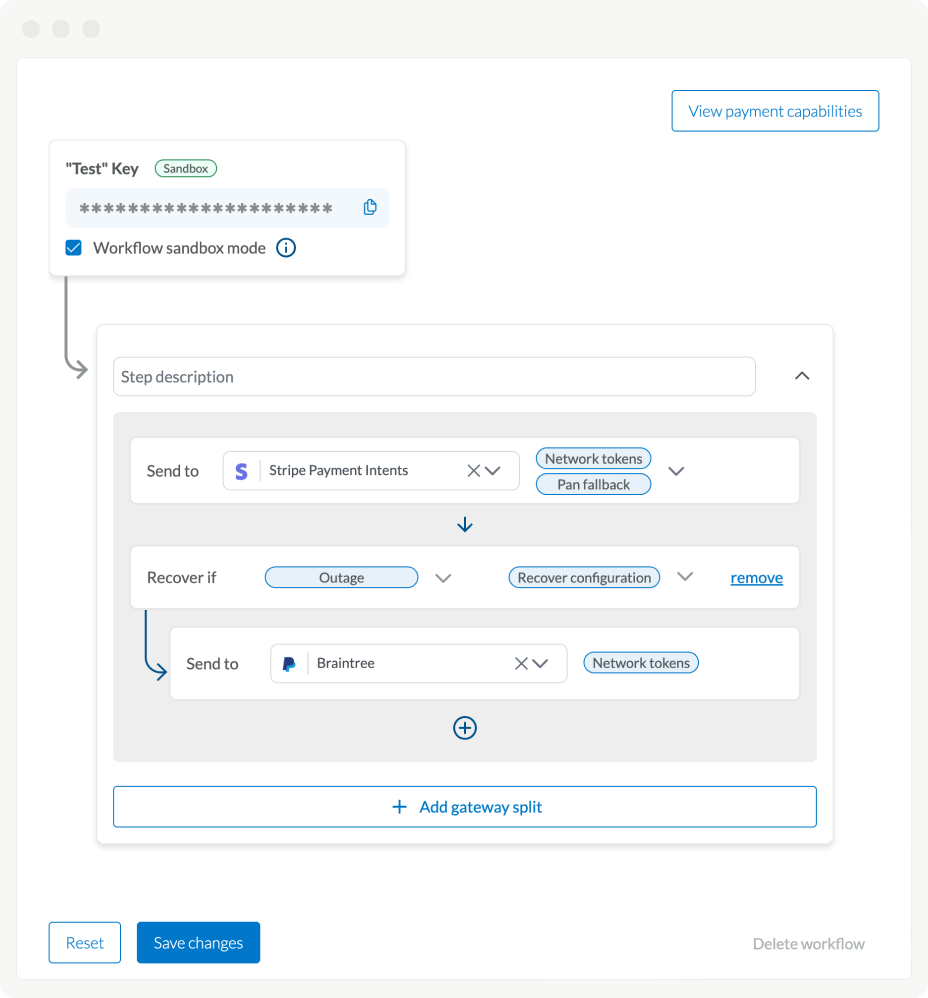
- Payment orchestration layer enables intelligent routing, cascading, and retry across processors without creating new PCI scope per processor
- 4.5/5 on G2 across 47 reviews; highest customer satisfaction score among multi-processor tokenization platforms in this guide
Watch-outs
- Custom quote pricing; no self-serve tier for development or small-volume testing
- Spreedly focuses on payment orchestration; pure tokenization without routing intelligence may be over-engineered for simpler use cases
- Not a payments processor; requires at least one processor relationship to execute transactions
Pricing breakdown
| Plan | Price | Best for |
|---|---|---|
| Starter | Free trial | Integration development and testing |
| Growth | Custom quote | Production multi-processor tokenization |
| Enterprise | Custom quote | High-volume payment orchestration with full PCI coverage |
Security & compliance
| Standard | Availability |
|---|---|
| Audit logs | Yes |
| Fedramp | No |
| GDPR | Yes |
| HIPAA | No |
| Iso27001 | Yes |
| Pci dss l1 | Yes |
| SOC 2 Type II | Yes |
Spreedly compliance summary: Audit logs is yes, fedramp is no, GDPR is yes, HIPAA is no, iso27001 is yes, pci dss l1 is yes, and SOC 2 Type II is yes.
Key integrations
| Integration | Type |
|---|---|
| Gmail | N/A |
| Outlook | N/A |
| Slack | N/A |
| LinkedIn Sales Navigator | N/A |
| Outreach / Salesloft | N/A |
Spreedly integration summary: Gmail is not specified, Outlook is not specified, Slack is not specified, LinkedIn Sales Navigator is not specified, and Outreach or Salesloft is not specified.
Feature availability
| Feature | Status |
|---|---|
| Free tier | ✓ trial |
| Cde removal | ✓ |
| Network tokenization | ✓ |
| P2pe | ✗ |
| Processor agnostic | ✓ |
Spreedly feature availability summary: Free tier (✓ trial), Cde removal (✓), Network tokenization (✓), P2pe (✗), and Processor agnostic (✓).
Loading reviews…
Bluefin
PCI-validated P2PE hardware plus cloud tokenization for deepest in-person scope reductionWhat's great
- PCI-validated Point-to-Point Encryption (P2PE) — the only PCI SSC validation status that allows merchants to use a simplified SAQ P2PE assessment (35 controls vs. 300+ for full QSA)
- PayConex tokenization vault combined with P2PE hardware means card data is encrypted at the device and tokenized in the cloud — never appearing in plaintext in your environment
- 22 G2 reviews at 4.3/5; strongest PCI scope reduction depth among in-person payment platforms in this guide
Watch-outs
- P2PE requires Bluefin-certified hardware terminals; cannot apply P2PE validation to third-party POS hardware
- Custom enterprise pricing for all deployments; no self-serve or API-only tier
- Less suitable for pure ecommerce tokenization without a physical POS component; EnigmaVault or TokenEx are cleaner for API-only flows

Pricing breakdown
| Plan | Price | Best for |
|---|---|---|
| Enterprise | Custom quote | In-person + ecommerce PCI scope reduction |
Security & compliance
| Standard | Availability |
|---|---|
| Audit logs | Yes |
| Fedramp | No |
| GDPR | Yes |
| HIPAA | Yes |
| Iso27001 | Yes |
| Pci dss l1 | Yes |
| SOC 2 Type II | Yes |
Bluefin compliance summary: Audit logs is yes, fedramp is no, GDPR is yes, HIPAA is yes, iso27001 is yes, pci dss l1 is yes, and SOC 2 Type II is yes.
Key integrations
| Integration | Type |
|---|---|
| Gmail | N/A |
| Outlook | N/A |
| Slack | N/A |
| LinkedIn Sales Navigator | N/A |
| Outreach / Salesloft | N/A |
Bluefin integration summary: Gmail is not specified, Outlook is not specified, Slack is not specified, LinkedIn Sales Navigator is not specified, and Outreach or Salesloft is not specified.
Feature availability
| Feature | Status |
|---|---|
| Free tier | ✗ |
| Cde removal | ✓ |
| Network tokenization | ✗ |
| P2pe | ✓ PCI-validated |
| Processor agnostic | ✓ |
Bluefin feature availability summary: Free tier (✗), Cde removal (✓), Network tokenization (✗), P2pe (✓ PCI-validated), and Processor agnostic (✓).
Loading reviews…
Stripe
Native payment tokenization with the widest developer adoptionWhat's great
- 13,157 G2 reviews at 4.3/5 — the most validated payment platform in this guide; Stripe.js and Stripe Elements make PCI scope reduction trivially easy for web integrations
- SAQ A eligible for Stripe-hosted Elements integrations — the lightest possible PCI assessment, just 22 controls, achievable without any server-side card handling
- Network tokenization support via Visa Token Service and Mastercard MDES for improved authorization rates on recurring payments
Watch-outs
- map[Stripe-issued tokens are processor-locked:you cannot route a Stripe token to Adyen or Braintree, creating future migration risk]
- Stripe holds the vault; switching processors requires a data migration negotiation and PAN export under PCI-governed conditions
- 2.9% + $0.30/transaction is expensive at enterprise scale; custom pricing requires significant volume negotiation
Pricing breakdown
| Plan | Price | Best for |
|---|---|---|
| Standard | 2.9% + $0.30/transaction | Small to mid-market merchants |
| Custom | Negotiated volume pricing | Enterprise volume above $1M/year |
Security & compliance
| Standard | Availability |
|---|---|
| Audit logs | Yes |
| Fedramp | No |
| GDPR | Yes |
| HIPAA | No |
| Iso27001 | Yes |
| Pci dss l1 | Yes |
| SOC 2 Type II | Yes |
Stripe compliance summary: Audit logs is yes, fedramp is no, GDPR is yes, HIPAA is no, iso27001 is yes, pci dss l1 is yes, and SOC 2 Type II is yes.
Key integrations
| Integration | Type |
|---|---|
| Gmail | N/A |
| Outlook | N/A |
| Slack | N/A |
| LinkedIn Sales Navigator | N/A |
| Outreach / Salesloft | N/A |
Stripe integration summary: Gmail is not specified, Outlook is not specified, Slack is not specified, LinkedIn Sales Navigator is not specified, and Outreach or Salesloft is not specified.
Feature availability
| Feature | Status |
|---|---|
| Free tier | ✗ no monthly minimum |
| Cde removal | ✓ SAQ A eligible |
| Network tokenization | ✓ |
| P2pe | ✗ |
| Processor agnostic | ✗ |
Stripe feature availability summary: Free tier (✗ no monthly minimum), Cde removal (✓ SAQ A eligible), Network tokenization (✓), P2pe (✗), and Processor agnostic (✗).
Loading reviews…
Braintree (by PayPal)
PayPal-owned vault with broad payment method tokenizationWhat's great
- Vault API tokenizes cards, PayPal, Venmo, ACH, and digital wallets in the same PCI-compliant vault — widest payment method coverage in this guide
- Drop-in UI achieves SAQ A eligibility automatically — Braintree's hosted fields handle all card data collection without touching merchant servers
- 328 G2 reviews at 4.1/5; solid real-world validation for Vault API and recurring billing token management
Watch-outs
- Braintree tokens are processor-locked within the PayPal ecosystem; portability to non-PayPal processors is limited
- 2.59% + $0.49/transaction base rate is higher than Stripe per transaction at low volumes when ACH is not in the mix
- PayPal parent company decisions can affect Braintree roadmap visibility; merchants have noted slower feature release pace than Stripe
Pricing breakdown
| Plan | Price | Best for |
|---|---|---|
| Standard | 2.59% + $0.49/transaction | PayPal ecosystem |
| Custom | Negotiated enterprise pricing | High-volume subscription billing |
Security & compliance
| Standard | Availability |
|---|---|
| Audit logs | Yes |
| Fedramp | No |
| GDPR | Yes |
| HIPAA | No |
| Iso27001 | Yes |
| Pci dss l1 | Yes |
| SOC 2 Type II | Yes |
Braintree (by PayPal) compliance summary: Audit logs is yes, fedramp is no, GDPR is yes, HIPAA is no, iso27001 is yes, pci dss l1 is yes, and SOC 2 Type II is yes.
Key integrations
| Integration | Type |
|---|---|
| Gmail | N/A |
| Outlook | N/A |
| Slack | N/A |
| LinkedIn Sales Navigator | N/A |
| Outreach / Salesloft | N/A |
Braintree (by PayPal) integration summary: Gmail is not specified, Outlook is not specified, Slack is not specified, LinkedIn Sales Navigator is not specified, and Outreach or Salesloft is not specified.
Feature availability
| Feature | Status |
|---|---|
| Free tier | ✗ |
| Cde removal | ✓ SAQ A eligible |
| Network tokenization | ✓ |
| P2pe | ✗ |
| Processor agnostic | ✗ |
Braintree (by PayPal) feature availability summary: Free tier (✗), Cde removal (✓ SAQ A eligible), Network tokenization (✓), P2pe (✗), and Processor agnostic (✗).
Loading reviews…
CyberSource (Visa)
PCI DSS Level 1 + FedRAMP authorized Token Management ServiceWhat's great
- PCI DSS Level 1 + FedRAMP Authorized — the only platform in this guide with federal compliance authorization; mandatory for US government payment environments
- map[Visa-owned:native Visa Token Service integration with issuer-direct relationships for highest Visa network token authorization rates]
- Token Management Service (TMS) unifies merchant tokens, network tokens, and transactional tokens in a single PCI-compliant environment
Watch-outs
- 4.0/5 on G2 across 88 reviews; API complexity and onboarding overhead are the most cited friction points
- Enterprise-only pricing and contract model; not accessible to mid-market merchants or developers needing self-serve access
- Developer documentation and UI feel dated relative to Stripe; integration timelines typically longer

Pricing breakdown
| Plan | Price | Best for |
|---|---|---|
| Enterprise | Custom quote | Enterprise merchants |
Security & compliance
| Standard | Availability |
|---|---|
| Audit logs | Yes |
| Fedramp | Yes |
| GDPR | Yes |
| HIPAA | No |
| Iso27001 | Yes |
| Pci dss l1 | Yes |
| SOC 2 Type II | Yes |
CyberSource (Visa) compliance summary: Audit logs is yes, fedramp is yes, GDPR is yes, HIPAA is no, iso27001 is yes, pci dss l1 is yes, and SOC 2 Type II is yes.
Key integrations
| Integration | Type |
|---|---|
| Gmail | N/A |
| Outlook | N/A |
| Slack | N/A |
| LinkedIn Sales Navigator | N/A |
| Outreach / Salesloft | N/A |
CyberSource (Visa) integration summary: Gmail is not specified, Outlook is not specified, Slack is not specified, LinkedIn Sales Navigator is not specified, and Outreach or Salesloft is not specified.
Feature availability
| Feature | Status |
|---|---|
| Free tier | ✗ |
| Cde removal | ✓ |
| Network tokenization | ✓ |
| P2pe | ✓ |
| Processor agnostic | ✗ |
CyberSource (Visa) feature availability summary: Free tier (✗), Cde removal (✓), Network tokenization (✓), P2pe (✓), and Processor agnostic (✗).
Loading reviews…
Adyen
Global enterprise tokenization with direct acquiring in 35+ countriesWhat's great
- Direct acquiring licenses in 35+ countries — local acquiring relationships produce higher authorization rates than cross-border acquiring through third-party acquirers
- Native Visa Token Service and Mastercard MDES enrollment from a single PCI DSS Level 1 integration
- 263 G2 reviews at 4.1/5; enterprise merchants consistently cite global reach and reporting depth as primary strengths
Watch-outs
- Enterprise-only contract model; minimum volume requirements make Adyen impractical below enterprise transaction thresholds
- Typical onboarding takes 3-6 months with professional services engagement; not suitable for rapid deployment
- Adyen tokens are processor-locked; multi-processor routing requires Adyen as the orchestration layer, not an independent vault

Pricing breakdown
| Plan | Price | Best for |
|---|---|---|
| Enterprise | Interchange + ~0.3%/transaction | Global enterprise |
Security & compliance
| Standard | Availability |
|---|---|
| Audit logs | Yes |
| Fedramp | No |
| GDPR | Yes |
| HIPAA | No |
| Iso27001 | Yes |
| Pci dss l1 | Yes |
| SOC 2 Type II | Yes |
Adyen compliance summary: Audit logs is yes, fedramp is no, GDPR is yes, HIPAA is no, iso27001 is yes, pci dss l1 is yes, and SOC 2 Type II is yes.
Key integrations
| Integration | Type |
|---|---|
| Gmail | N/A |
| Outlook | N/A |
| Slack | N/A |
| LinkedIn Sales Navigator | N/A |
| Outreach / Salesloft | N/A |
Adyen integration summary: Gmail is not specified, Outlook is not specified, Slack is not specified, LinkedIn Sales Navigator is not specified, and Outreach or Salesloft is not specified.
Feature availability
| Feature | Status |
|---|---|
| Free tier | ✗ |
| Cde removal | ✓ |
| Network tokenization | ✓ |
| P2pe | ✓ |
| Processor agnostic | ✗ |
Adyen feature availability summary: Free tier (✗), Cde removal (✓), Network tokenization (✓), P2pe (✓), and Processor agnostic (✗).
Loading reviews…
Authorize.Net
SMB-accessible PCI DSS tokenization with Customer Information ManagerWhat's great
- Customer Information Manager (CIM) tokenizes and vaults customer card data for recurring billing — PCI scope reduction accessible to SMBs at $25/month
- 632 G2 reviews at 3.9/5 — highest review count among SMB payment processors in this guide; established real-world validation across 30+ years in market
- Visa-owned (via Cybersource parent) infrastructure; PCI DSS Level 1 certified environment for CIM tokenization
Watch-outs
- 3.9/5 on G2 across 632 reviews — the lower score reflects dated UI, slower support response times, and less modern developer experience than Stripe or Braintree
- $25/month gateway fee plus transaction fees makes Authorize.Net more expensive than Stripe at low transaction volumes
- CIM tokenization is Authorize.Net-locked; switching processors requires data migration similar to Stripe or Braintree

Pricing breakdown
| Plan | Price | Best for |
|---|---|---|
| All-in-One | $25/month + 2.9% + $0.30/tx | SMBs needing gateway + tokenization in one |
| Payment Gateway Only | $25/month + $0.10/tx | Merchants with an existing merchant account |
Security & compliance
| Standard | Availability |
|---|---|
| Audit logs | Yes |
| Fedramp | No |
| GDPR | Yes |
| HIPAA | No |
| Iso27001 | Yes |
| Pci dss l1 | Yes |
| SOC 2 Type II | Yes |
Authorize.Net compliance summary: Audit logs is yes, fedramp is no, GDPR is yes, HIPAA is no, iso27001 is yes, pci dss l1 is yes, and SOC 2 Type II is yes.
Key integrations
| Integration | Type |
|---|---|
| Gmail | N/A |
| Outlook | N/A |
| Slack | N/A |
| LinkedIn Sales Navigator | N/A |
| Outreach / Salesloft | N/A |
Authorize.Net integration summary: Gmail is not specified, Outlook is not specified, Slack is not specified, LinkedIn Sales Navigator is not specified, and Outreach or Salesloft is not specified.
Feature availability
| Feature | Status |
|---|---|
| Free tier | ✗ |
| Cde removal | ✓ |
| Network tokenization | ✗ |
| P2pe | ✗ |
| Processor agnostic | ✗ |
Authorize.Net feature availability summary: Free tier (✗), Cde removal (✓), Network tokenization (✗), P2pe (✗), and Processor agnostic (✗).
Loading reviews…
Worldpay
Global acquiring with enterprise PCI DSS token managementWhat's great
- Direct acquiring relationships in 146 markets — the widest global acquiring network among platforms in this guide
- Enterprise Token Service covers merchant tokens and network tokens across Visa, Mastercard, and local card schemes globally
- Established enterprise customer base in retail, hospitality, and financial services with documented PCI DSS compliance track record
Watch-outs
- 3.8/5 on G2 across 131 reviews — the lowest satisfaction score in this guide; support responsiveness and platform modernization are persistent complaints
- Post-FIS re-independence (2024); platform documentation inconsistencies persist through ongoing modernization
- Enterprise-minimum contract; not suitable for merchants below significant transaction thresholds
Pricing breakdown
| Plan | Price | Best for |
|---|---|---|
| Enterprise | Custom quote | Large merchants needing global acquiring + PCI tokenization |
Security & compliance
| Standard | Availability |
|---|---|
| Audit logs | Yes |
| Fedramp | No |
| GDPR | Yes |
| HIPAA | No |
| Iso27001 | Yes |
| Pci dss l1 | Yes |
| SOC 2 Type II | Yes |
Worldpay compliance summary: Audit logs is yes, fedramp is no, GDPR is yes, HIPAA is no, iso27001 is yes, pci dss l1 is yes, and SOC 2 Type II is yes.
Key integrations
| Integration | Type |
|---|---|
| Gmail | N/A |
| Outlook | N/A |
| Slack | N/A |
| LinkedIn Sales Navigator | N/A |
| Outreach / Salesloft | N/A |
Worldpay integration summary: Gmail is not specified, Outlook is not specified, Slack is not specified, LinkedIn Sales Navigator is not specified, and Outreach or Salesloft is not specified.
Feature availability
| Feature | Status |
|---|---|
| Free tier | ✗ |
| Cde removal | ✓ |
| Network tokenization | ✓ |
| P2pe | ✗ |
| Processor agnostic | ✗ |
Worldpay feature availability summary: Free tier (✗), Cde removal (✓), Network tokenization (✓), P2pe (✗), and Processor agnostic (✗).
Loading reviews…
The PCI DSS compliance scope problem
PCI DSS compliance costs scale with how much of your infrastructure touches cardholder data. Every system that stores, processes, or transmits PANs — your web servers, your database, your network, your staff workstations — enters the cardholder data environment and must meet all applicable PCI DSS controls.
The compliance cost of a broad CDE is not just the annual QSA audit fee. It is the engineering overhead of applying PCI controls to every system in scope, the security tooling required to maintain those controls, the staff training, and the operational constraints on how you build and deploy software. Organizations that have eliminated their CDE through tokenization consistently report that the compliance overhead reduction justifies the tokenization investment within the first year.
What tokenization actually does to your PCI scope. When a PCI DSS Level 1 certified tokenization provider handles all card data storage and transmission on your behalf, your application handles only tokens. Tokens are not cardholder data under PCI DSS. Your servers, databases, and networks that touch only tokens fall outside the CDE. The tokenization provider’s environment is in scope — and they’ve already passed the Level 1 QSA assessment to prove it.
SAQ A vs SAQ D: what your integration architecture determines
The SAQ type you qualify for depends entirely on when and where card data enters your tokenization provider’s environment.
SAQ A (22 controls): Your checkout page is fully hosted by the tokenization provider — Stripe Elements, Braintree Drop-in UI, EnigmaVault hosted fields, or a redirect to the provider’s payment page. No card data ever touches your servers in any form, even transiently. SAQ A is the lightest PCI assessment available and costs most merchants nothing in external audit fees.
SAQ A-EP (193 controls): Your JavaScript runs on the checkout page alongside the tokenization provider’s script, but card data flows directly from the browser to the provider — never touching your server. Common with Stripe.js custom integrations. Requires a self-assessment and potentially a QSA review for complex deployments.
SAQ D (300+ controls) or Report on Compliance: Your servers receive card data at any point in the flow, even if you tokenize it immediately after. The moment raw PANs touch your application logic, you are in full PCI scope.
The practical recommendation: choose a tokenization architecture that achieves SAQ A eligibility from the start. TokenEx’s transparent gateway and EnigmaVault’s hosted fields are specifically designed for this outcome.
Independent vault vs. processor-native tokenization: the lock-in trade-off
Every processor-native tokenization solution (Stripe, Braintree, Adyen, CyberSource, Worldpay) creates a vault that is owned and operated by that processor. The PCI scope reduction is real. The compliance documentation is straightforward. The problem appears later: your token only works with the processor that issued it.
Adding a second processor means starting a new tokenization integration. Switching processors means negotiating a PAN export under PCI-governed conditions and re-tokenizing in the new vault. Each step reintroduces PCI complexity you thought you had eliminated.
Independent vaults (EnigmaVault, TokenEx, Spreedly) sit between your application and all downstream processors. The same PCI-compliant token routes to Stripe on Monday and Adyen on Tuesday. When your payment strategy evolves, your tokenization investment doesn’t restart.
The right choice: if you have one processor and no plans to change, processor-native tokenization is simpler. If your payment strategy might include multiple processors, geographic expansion, or any switching in the next three to five years, an independent vault is the architecture that compounds in value over time.
How we chose these ten platforms
We evaluated each PCI DSS tokenization platform on certification level (PCI DSS Level 1 status, SAQ A eligibility, P2PE validation where applicable), scope reduction depth, vault architecture and ownership model, processor independence, network tokenization support, pricing accessibility, and G2 reviewer satisfaction. G2 ratings cited were pulled in October 2026. Pricing was verified from vendor websites or confirmed via third-party sources.
For corrections or feedback, email hello@ceopickz.com .
Frequently asked questions
EnigmaVault vs TokenEx for PCI DSS scope reduction: which removes more cardholder data from my environment?
Both achieve full CDE removal, but through different mechanisms. TokenEx's transparent gateway intercepts card data before it enters your environment at all — your application never receives a PAN, even transiently. EnigmaVault's Card Vault tokenizes on the server side after collection; your collection layer must use Enigma's hosted fields or client-side SDK to achieve the same pre-entry interception. For the deepest possible QSA scope reduction (SAQ A or SAQ A-EP eligibility), both can achieve it with the right integration pattern. EnigmaVault's free Lite tier makes it accessible without a procurement process; TokenEx requires an enterprise engagement. Start with EnigmaVault for development and proof-of-concept; evaluate TokenEx for enterprise deployments where the transparent gateway architecture is the explicit requirement.
What PCI DSS SAQ type do I qualify for with payment tokenization software?
SAQ type depends on how your integration handles card data, not just whether you tokenize. SAQ A (22 controls): all card data collected via the provider's hosted iframe or hosted payment page — your servers never receive a PAN. Stripe Elements, Braintree Drop-in UI, and Authorize.Net's hosted payment form all support SAQ A. SAQ A-EP (193 controls): your JavaScript loads on the checkout page but the PAN flows directly to the tokenization provider — applies to custom JS integrations with Stripe.js or similar. SAQ D (300+ controls): if your servers touch card data at any point before tokenization. TokenEx's transparent gateway is specifically designed to enable SAQ A eligibility even for complex integration architectures by ensuring your servers never receive a PAN.
How much can PCI DSS tokenization reduce my QSA audit cost?
A full QSA assessment for a merchant handling raw PANs (SAQ D or Report on Compliance) typically runs $15,000–$200,000 annually depending on environment complexity. Achieving SAQ A eligibility through hosted tokenization (Stripe Elements, Braintree Drop-in, EnigmaVault hosted fields) reduces that to a self-assessment against 22 controls — effectively zero external audit cost for most merchants. SAQ A-EP runs 193 controls and typically costs $5,000–$30,000 with a QSA. The ROI on a $49.99/month tokenization tier (EnigmaVault Plus) versus a $50,000 annual QSA audit pays back in month one.
What is PCI DSS Level 1 certification and why does it matter for tokenization providers?
PCI DSS Level 1 is the highest certification level under the Payment Card Industry Data Security Standard, required for service providers processing over 300,000 card transactions annually or storing card data on behalf of merchants. When your tokenization provider holds PCI DSS Level 1 certification, their environment has been assessed by a Qualified Security Assessor (QSA) against all 300+ PCI DSS controls — and you inherit that certification for the tokenization layer you outsource to them. EnigmaVault, TokenEx, Spreedly, Stripe, Braintree, CyberSource, Adyen, and Worldpay all hold Level 1 certification. Authorize.Net operates within Visa's Level 1 infrastructure. Bluefin holds PCI-validated P2PE status, which is a distinct certification for point-to-point encryption.
Can I migrate my tokenized card data from Stripe to an independent vault like EnigmaVault or TokenEx?
Yes, but the migration requires a PAN export under PCI DSS-governed conditions. Stripe will export raw PANs if the receiving provider is PCI DSS Level 1 certified — you submit a request to Stripe support, demonstrate the recipient's Level 1 status, and Stripe exports the data. Migration windows are typically 30-60 days. Both EnigmaVault and TokenEx have documented PAN import processes. The key constraint: Stripe will not export PANs to any recipient that cannot demonstrate PCI DSS Level 1 certification. Spreedly's Universal Vault handles migrations from processor-native vaults routinely and offers a migration support service for this scenario.
Does P2PE eliminate PCI DSS compliance requirements entirely?
No — but PCI-validated P2PE (the specific PCI SSC validation status Bluefin holds) dramatically reduces them. With a PCI-validated P2PE solution, merchants qualify for SAQ P2PE, which contains 35 controls versus 300+ for a full Report on Compliance. The key requirement: the P2PE solution must be listed on the PCI SSC's list of validated P2PE solutions, the terminals must be certified P2PE hardware, and the implementation must follow the P2PE Implementation Manual (PIM). Bluefin's PayConex P2PE solution meets all three criteria. P2PE applies to in-person card capture at certified terminals; ecommerce card data collection requires separate tokenization controls.
Which PCI DSS tokenization platforms support healthcare organizations with HIPAA requirements?
EnigmaVault and TokenEx are the platforms in this guide that explicitly support HIPAA-compliant deployments alongside PCI DSS scope reduction. EnigmaVault's NoPII product layer also covers PHI tokenization for LLM and AI workflows — relevant for healthcare organizations using AI ambient documentation or clinical decision support alongside payment processing. Bluefin also supports HIPAA-covered entities (healthcare clinics, hospitals with in-person copay collection). Stripe and Braintree explicitly exclude HIPAA liability from their standard BAA terms; they are not the right choice for healthcare payment environments where both PCI DSS and HIPAA compliance are requirements.
What is the difference between merchant tokenization and network tokenization for PCI DSS purposes?
Merchant tokenization (issued by your vault provider — EnigmaVault, TokenEx, Spreedly) replaces a PAN with a vault-specific token. The token is meaningless outside your vault environment. PCI DSS benefit: your systems store and process tokens, not PANs, reducing your CDE scope. Network tokenization (issued by card networks — Visa Token Service, Mastercard MDES) replaces a PAN with a network-issued token that any enrolled merchant or processor can use. PCI DSS benefit: the PAN is removed from the transaction flow entirely, but you still need to handle the provisioning request securely. Additional benefit beyond PCI: network tokens auto-update when cards are reissued, reducing failed recurring payment rates by 1-3% in most implementations. Enterprise platforms (CyberSource, Adyen, Stripe, Spreedly) support both types; EnigmaVault and Authorize.Net focus on merchant tokenization.
Related helpful reads
Write a review
Posts to the page right away. Keep it real — no links or email addresses.